Digital Guide

Looking Under the Paint:
following in the footsteps of the Bernese Carnation Masters
In preparation for the exhibition, three altarpieces by the Carnation Masters and four panels from a cycle addressing the subject of justice were examined using state of the art infrared reflectography technology. The process involves infrared radiation (near-infrared) penetrating the layer of paint and being reflected back by the pale ground. Such an approach enables a visible image of the underdrawing to be produced. Looking beneath the layer of paint creates an indispensable point of departure for researching the artist’s working process and the state in which the work has been preserved – but can also provide valuable clues in attributing the work.

Whether the underdrawing can be made visible depends on various factors, the imaging technology and the processing of the image data both being crucial in terms of the ultimate quality of the image. The pigmentation and thickness of the layer of paint determine the extent to which the infrared radiation can penetrate. The medium used for the underdrawing and the lightness of the ground must contrast well in infrared light for the underdrawing to be legible.

The method, known as infrared photography, used in conservation science since the 1930s, has been constantly developed further. The tests conducted in preparation for the exhibition, using the latest imaging technology (sensor technology and optics) and state of the art image data processing, set new standards in quality.

Infrared reflectography using Acuros® SWIR, IRR 850-1700/2100nm: Markus Küffner, Hochschule der Künste Bern
Analysis and text: Dr. Nathalie Bäschlin, Kunstmuseum Bern
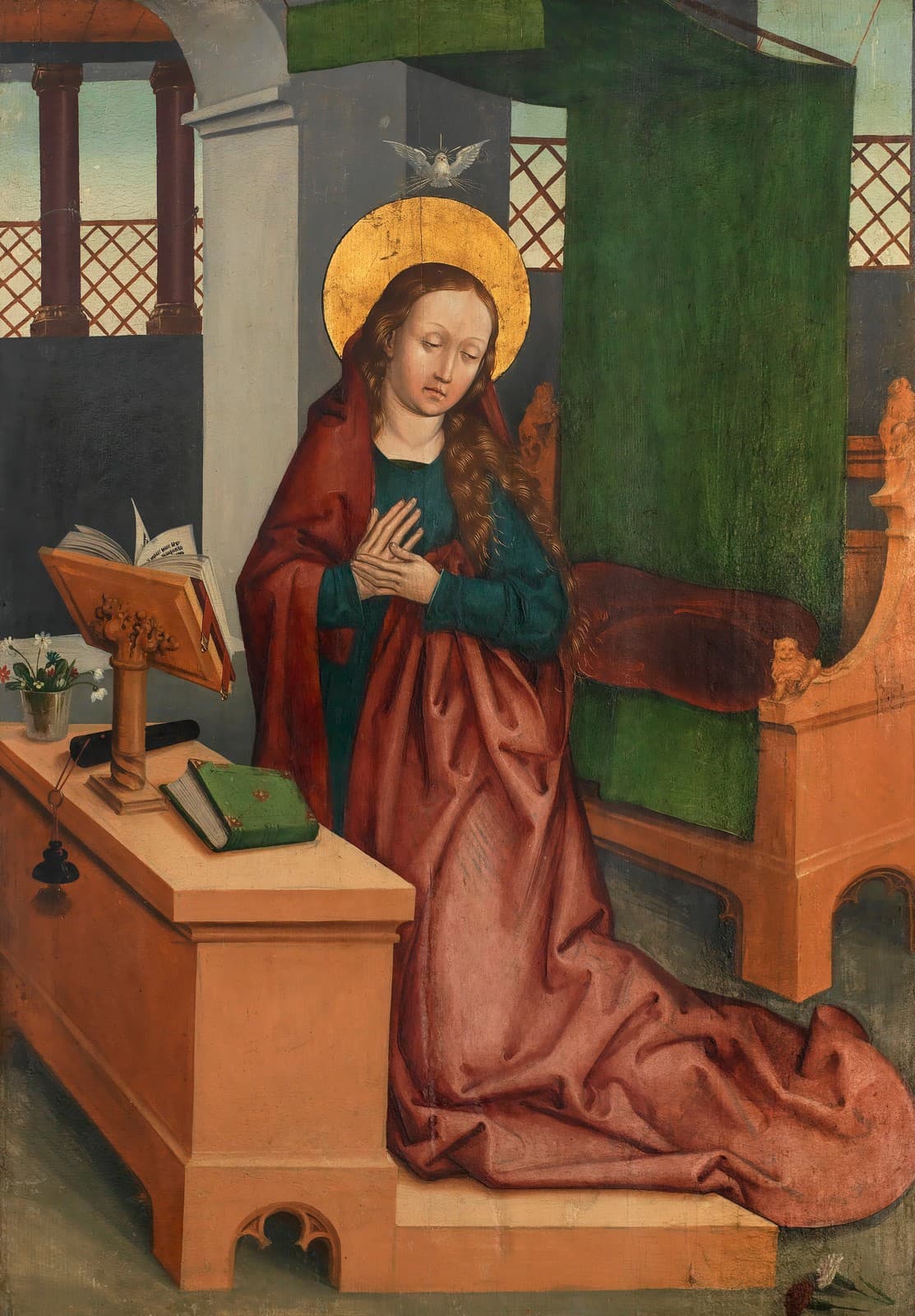
1. Der Marienaltar (The St. Mary Altar)

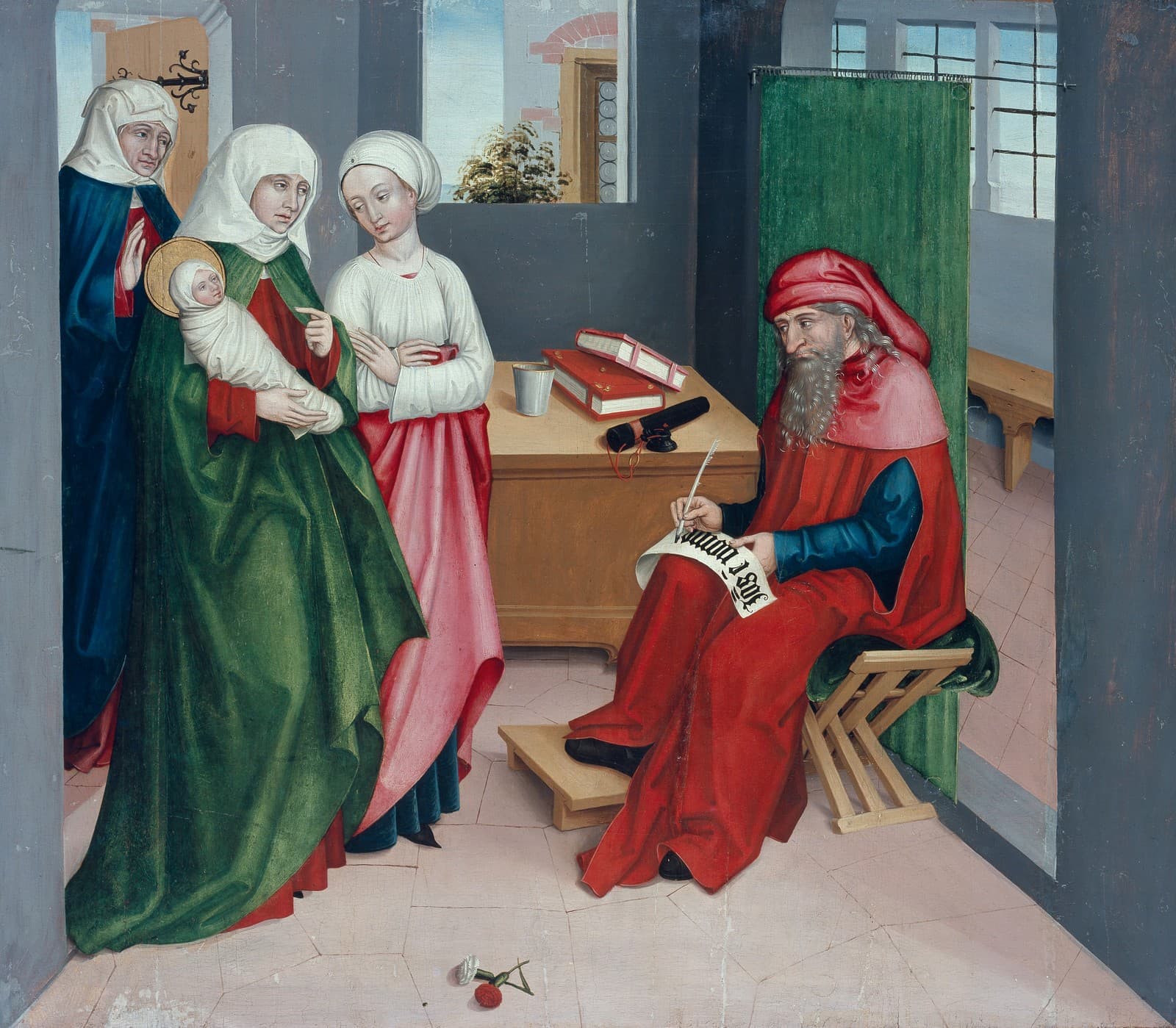
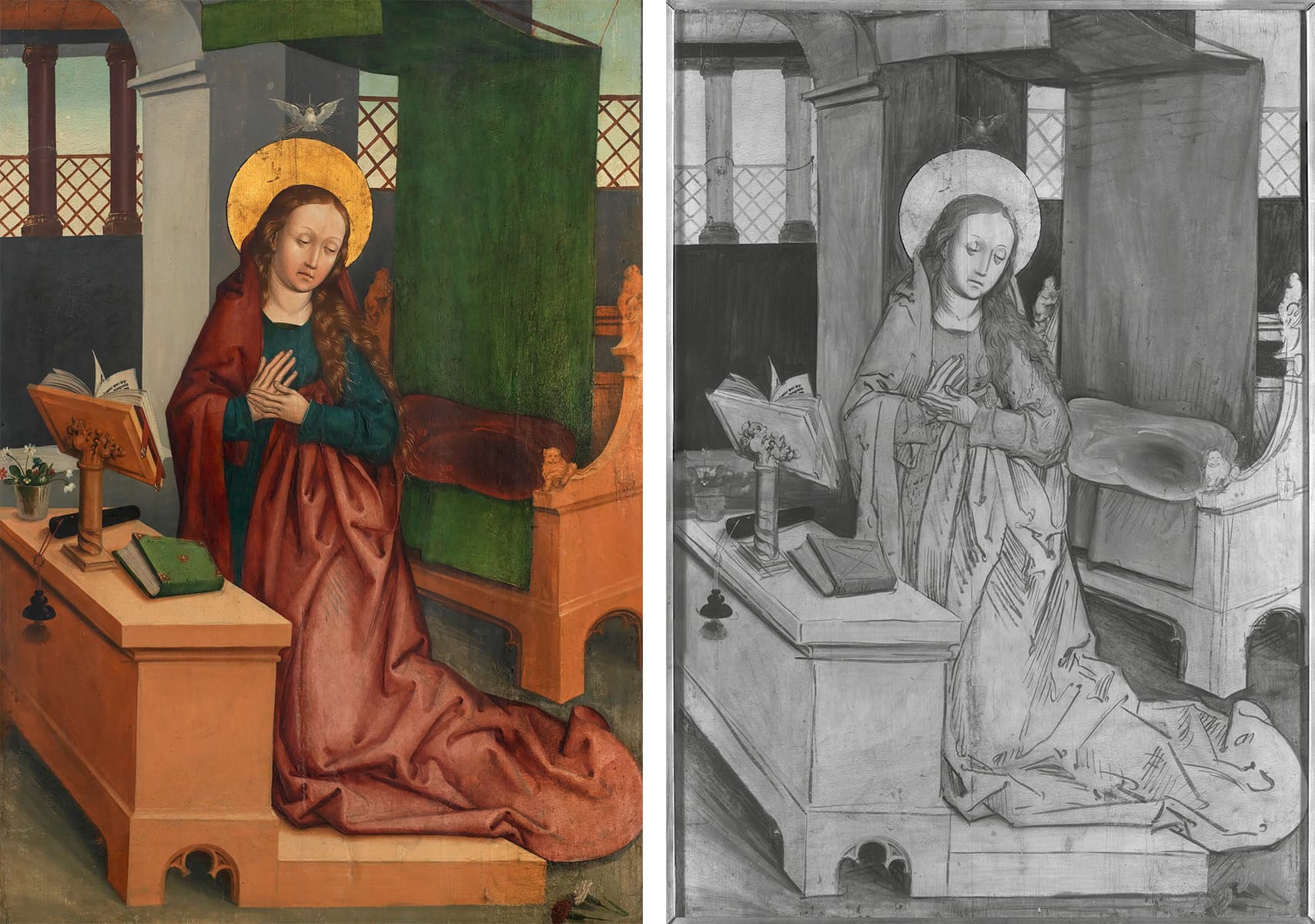
Fig. 1.1: Maria der Verkündigung, image of the entire work, infrared reflectography.
Fig. 1.2: detail of Maria der Verkündigung. In the IRR only the painted trestling is visible, but no underpainting, infrared reflectography.
Fig. 1.3: detail of the underpainting of the trestling, Die Namensgebung des Johannes.(St. John altar, around 1495/1500), infrared reflectography.

The new IRR image of the figure of St. Mary on the outside of the altarpiece’s left panel → Fig. 1.1 shows almost the complete underdrawing at a glance and in high resolution. The painter produced the underdrawing using pointed brushes. The stroke varies depending on the pressure, angle and amount of paint. The good contrast suggests watercolour pigmented with carbon black.

The painters of that time created their underdrawings based on printed sources or sketches, sometimes using a 1:1 transfer via pouncing. The drawing of the figure of St. Mary was executed freehand, research suggests a source from Strasbourg. Rapidly and confidently drawn lines position the eyes, nose and mouth, while the contours of the hands have been redrawn. The robe has been executed quickly and precisely. Lines, concluding in semicircles and zigzag hatching define the folds.

Minor corrections to the details and perspective can be found in both the underdrawing and subsequent painterly execution, for example in the lectern or St. Mary’s hands. The trestling in the background → Fig. 1.2 is not part of the underdrawing, it was added later during the process of painting. An example for comparative purposes → Fig. 1.3 shows the exact opposite: the sketchily executed trestling on the panel Namensgebung des Johannes (The Naming of John) is only evident in the underpainting; it was not executed during the actual painting.

2. Der Johannesaltar (The St. John Altar)

Fig. 2.1: detail from Die Namensgebung des Johannes. The red arrows indicate the colour symbols ‘g’ (blue) and ‘r’ (red ), infrared reflectography.
Fig. 2.2: detail from Die Taufe Christi im Jordan, infrared reflectography.

Kunstmuseum Bern keeps four panels from the St. John altarpiece, proved to have been painted for the Dominican Church in Bern and dating from around 1495/1500. A comparison of the underdrawings of Namensgebung des Johannes (The Naming of John) and Taufe Christi im Jordan (The Baptism of Christ) reveals clear differences. The figures depicted in the Namensgebung → Fig. 2.1 are skilfully and freely drawn, emphasising contours and reduced to a few lines. The face of Christ in the Taufe → Fig. 2.2 is different. The modelling has been executed using precise hatching, reminiscent of copperplate engravings. The panels of the St. John altarpiece had previously been attributed to a single Carnation Master. However, an examination of the newest imagery of the underdrawings suggests the involvement of two skilled painters. The result is interesting, refocussing research on the issue of how workshops in Bern were organised around 1500. How were commissions awarded, and did skilled painters work for different workshops? New infrared reflectography of all the altarpieces, augmented by research into the materials and painting techniques, would generate a promising foundation for a renewed, in-depth comparison of the underdrawings.

In → Fig. 2.1, two colour codes are visible (red arrows). Glass painters used such markings to document the colour schemes on sketches for the execution of their designs. In the underdrawing on the panels for altarpieces they are thought to have provided instructions for other collaborators concerning the working process. Researchers discovered colour codes on two panels of the St. John altarpiece that differ from known abbreviations. The letters ‘w’ (white), ‘r’ (red) and ‘s’ or ‘g’ (blue) have been documented. Identical colour codes have also been documented on a Nuremberg altarpiece. The corresponding symbols demonstrate, as do historical sources, that there was apparently close collaboration between the painting workshops in Bern and Nuremberg.

On the Namensgebung des Johannes panel, the prominent placement of red and white carnations is striking. They are not included in the underdrawing. They were added at the end, in a similar manner to a signature. The symbol of the carnation, still an enigma today, was used in various cities for about 20 years at the end of the 15th century. Charlotte Gutscher-Schmid’s 2007 publication Nelken statt Namen (Carnations Instead of Names) was a milestone in the research of the Bernese Carnation Masters. She suspects that the symbol declares affiliation to a Christian brotherhood or the emblem of a guild of Swiss painters.

3. A Cycle Addressing the Subject of Justice: new insights concerning its attribution

Fig. 3.1: detail of Der Sohn des Kaisers Trajan reitet übermütig einher, infrared reflectography.
Fig. 3.2: detail of Kaiser Friedrich II. mit seinem Gefolge. The red arrow indicates the colour code ‘s’ or ‘g’ (blue), infrared reflectography.
Fig. 3.3: detail of Kaiser Trajan begnadigt seinen Sohn. The red arrow indicates the colour code ‘w’ (white) and ‘r’ (red), infrared reflectography.

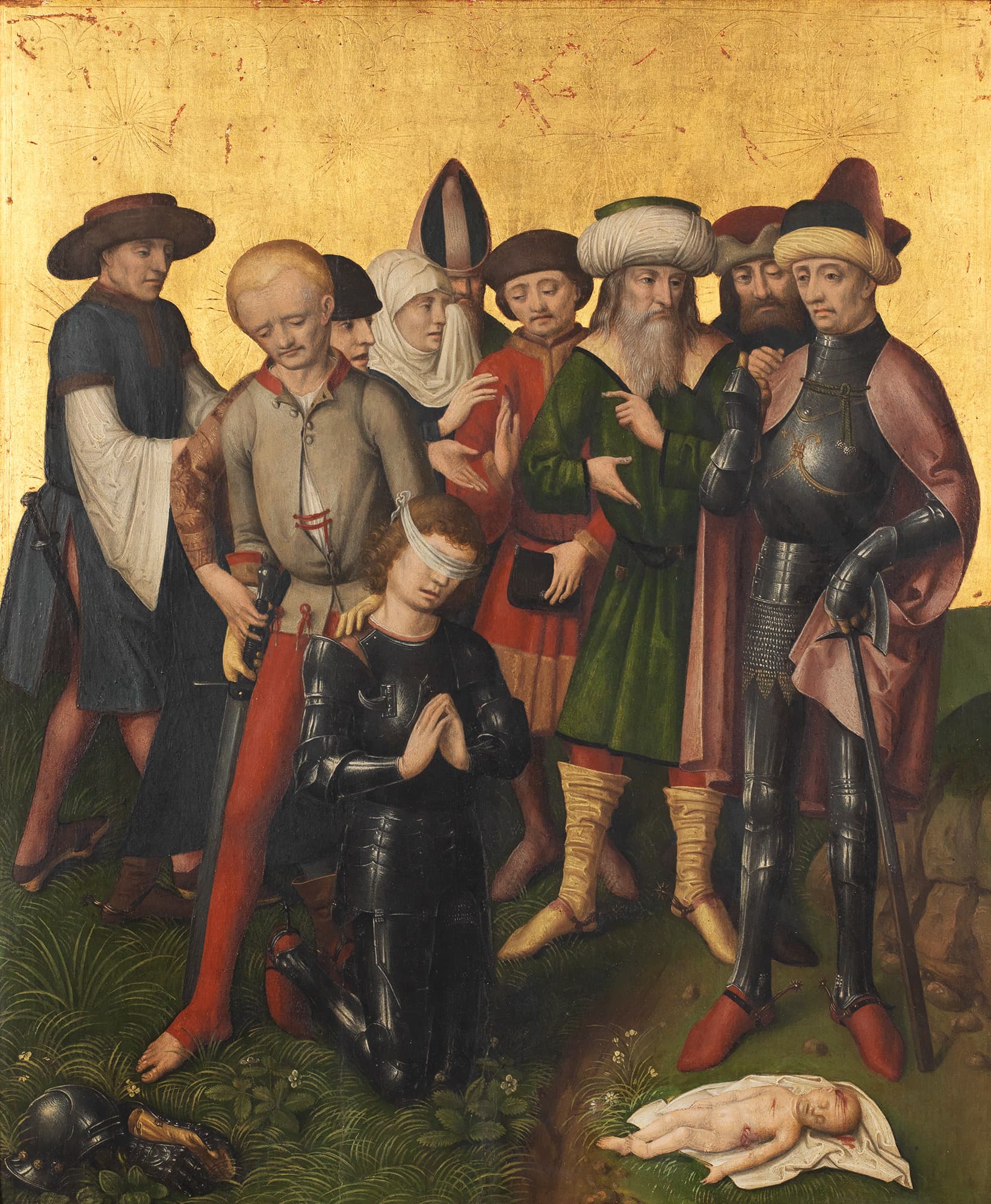
The four small panels are among the oldest in Kunstmuseum Bern’s collection. They depict the legend of Trajan and two emperors closely linked to the history of Bern. Literature refers to the bear chewing (Kaiser Friedrich II. mit seinem Gefolge / Emperor Friedrich II and His Court) and the halberdiers dressed in the Bern colours of red and black (Ein deutscher Kaiser sitzt in Bern zu Gericht / A German Emperor Sits in Judgement in Bern). They probably hung in the hall of the Small Council, where justice was administered in Bern.

The attribution to the Bernese Carnation Masters has proved controversial in the research to date. A key argument against it was that carnations have so far only been found in religious art. The new infrared reflectography reveals surprising clues. Two panels exhibit the same colour codes as documented in the underdrawings of the St. John altarpiece. In → Fig. 3.2 and → Fig. 3.3 red arrows indicate the ‘w’ (white), the ‘r’ (red) and an ‘s’ or ‘g’ (blue). This provides strong evidence for attributing the panels to the painters of the St. John altarpiece, which is demonstrably by the Bernese Carnation Masters.

It is also surprising that only three panels exhibit comparable underdrawings. On the panel Ein deutscher Kaiser sitzt in Bern zu Gericht, which differs slightly in its dimensions, the underdrawing is barely visible. We can conclude from this that the underdrawing – if present –  was executed differently and the layer of paint structured differently. It is therefore reasonable to assume that this work was created by a different painter.

The underdrawings on the other three panels are clearly visible. A comparison with the Taufe Christi im Jordan panel of the St. John altarpiece suggests itself. The underdrawing → Fig. 3.1 is detailed, using fine, loosely applied brushstrokes. The painterly execution differs from the underdrawing in many places. A good example is the dog at the bottom of the painting. In the drawing it is picking up a scent, while in the finished work it is jumping up joyfully. A detailed analysis of the underdrawings, a comparison with sources and other works, remains to be done.

The findings raise several questions. Is it sensible to reduce the output of painters active in Bern between 1480 and 1500 to works bearing the carnation symbol? It was a symbol used on large-scale works in churches that were accessible to the public. Is it plausible that these same workshops also carried out other, non-religious commissions? Such questions highlight the need for further research using conservation science. The infrared reflectography presented here was initially created as part of a test. Further ones possess the potential of significantly expanding existing knowledge about the Bernese Carnation Masters.

Close