Introduction
With the exhibition Life in Full. Old Masters from Duccio to Liotard, Kunstmuseum Bern is focussing on treasured works of art from the 13th to the 18th centuries that represent a historically significant part of the collection. Many of the works presented were already part of the collection when the museum opened in 1879.
Thematically organised galleries provide an overview of groups of works that both define the institution’s identity but also highlight motifs and representational conventions typical of their respective historical periods. The exhibition layout reflects life in all its diversity, martyrdom encountering self-expression, asceticism encountering opulence and morality encountering sensuality.
The exhibition begins with portraits and still lifes from the Baroque period. Many works are by artists from Bern, where, thanks to the economic prosperity of the powerful city-state, a local tradition of painting to the highest quality had been able to establish itself since the end of the 15th century. Both the portraits and opulent still lifes served their wealthy clientele as a means of demonstrating prestige, power, and prosperity.
In contrast, the works from the Middle Ages presented in the following galleries address narratives of redemption, serving as both religious instruction and for the veneration of saints. Not only the devotional imagery and small house altars by famous Sienese and Florentine artists of the 13th to 15th centuries, but also the altarpieces created on the eve of the Reformation by the Bernese Carnation Masters as well as Niklaus Manuel vividly conveyed to the faithful the lives and works of the saints.
During the early modern period, the range of motifs available to the visual arts expanded, although many works continued to serve as moral instruction. A small gallery contains scenes from ancient mythology, illustrating the trials and tribulations of mythological characters. Allegorical figures, such as those found in the final gallery, were a popular instrument for conveying both virtues and vices. In dramatically sophisticated paintings, some of monumental size, personifications urge virtuous and moderate conduct, reminding us of the transience of all earthly existence.
I. Baroque Stagings of the Self
Dignified gazes, stiff poses, elaborate ruffs, expensive furs. The portraits, assembled as an imaginary ancestral gallery, reflect the significant role that portraiture played during the Baroque era. Art was commissioned and owned by an exclusive group, a milieu including rulers, the church, clergy, as well as influential aristocratic families and the patriciate. Portraits served this elite as a conspicuous and precisely staged documentation of their wealth, social standing and lineage.
Portrait painting often represented the most important source of income for artists. Ones such as Joseph Heintz the Elder from Basel, Joseph Werner the Younger from Bern and Jean-Etienne Liotard from Geneva enjoyed international careers as portrait painters, being employed at royal and imperial courts. In the powerful and wealthy city-state of Bern, Johannes Dünz was in demand as a portrait painter of the Bern patriciate. His works feature the high-necked garments of the time, attire which was regulated by the authorities. Such rigidity was gradually replaced during the 18th century, under the influence of French fashion, by sumptuous fabrics, vibrant colours and deeper necklines.
During the 17th century, a distinctive form of still-life painting developed in Bern, in which Albrecht Kauw, who had emigrated from Strasbourg, was a key protagonist. As a central artistic figure for the Bern upper classes, he created vedute of his clients’ country estates and still lifes in the form of systematically arranged pantries, displaying the rich produce of their estates, as pictorial decoration for their dining rooms. The works of art could be interpreted as demonstrations of the success and proficiency of estate owners in matters of crop and animal husbandry.
II. Italian Treasures
During the 19th century, a growing interest in the development and history of art led to a new appreciation of Italian painting of the Middle Ages. It was in such a context that the Bern history painter Adolf von Stürler (1802–1881), a descendant of an old patriciate family, assembled a significant collection of works by 13th to 15th century Sienese and Florentine painters, which was bequeathed to Kunstmuseum Bern in 1902. These works, representing true treasures of early Italian painting, are unparalleled in Switzerland.
Adolf von Stürler’s collection comprises 23 works, primarily devotional imagery and domestic altars for private use, which had been largely commissioned by private individuals, frequently members of religious orders. It also includes several fragments of larger altarpieces that were removed from their original context, disassembled into panels and sold individually.
The oldest work, Duccio di Buoninsegna’s Maestà (1290–1295), is of outstanding importance. While the artist’s work still exhibited characteristics of Byzantine art and icon painting, it already reflects Duccio’s efforts in creating a spatial illusion of depth, a sculptural corporeality and expressive facial features. His work was therefore ground-breaking in the development of early Italian painting, which was subsequently to be characterised by increased naturalism, emotional expressiveness and rich colour. A pinnacle in this development is the painting Madonna col Bambino (c. 1445–1450) by the Florentine painter Fra Angelico, in which the Renaissance is already being heralded.
III. A Visually Powerful Doctrine of Faith
For centuries, narratives from the history of salvation constituted the most important subject matter in the visual arts. Until the Reformation, works of art served as an effective, accessible visual means of teaching for the Church, facilitating the dissemination and communication of religious lessons. The production of sacred imagery reached its zenith during the late Middle Ages, thanks in part to the active patronage of wealthy private individuals. They viewed the commissioning of altarpieces as a pious act intended to benefit their own salvation.
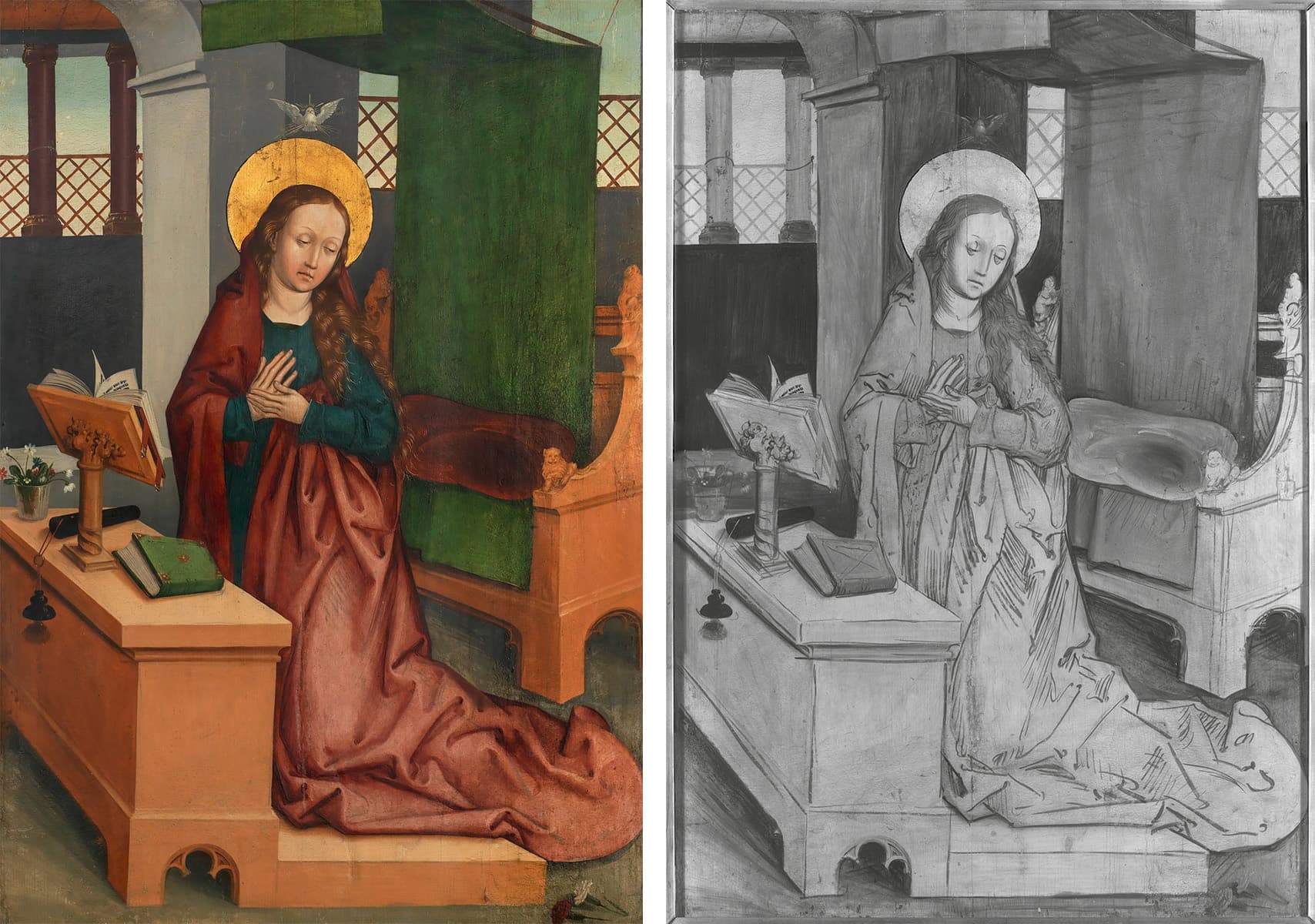
Even in the wealthy city-state of Bern, the completion of the cathedral and the construction of numerous other churches that had to be furnished led, at the end of the 15th century, to the establishing of various charitable foundations for the funding of altars. The panels from the St. John and St. Mary altars date from Bern’s first artistic golden age. They were created by the Bernese Carnation Masters – anonymous artists organised in painting workshops who signed their works with carnations in red and white. Their works are characterised by memorably austere compositions that forgo any narrative embellishment and drama.
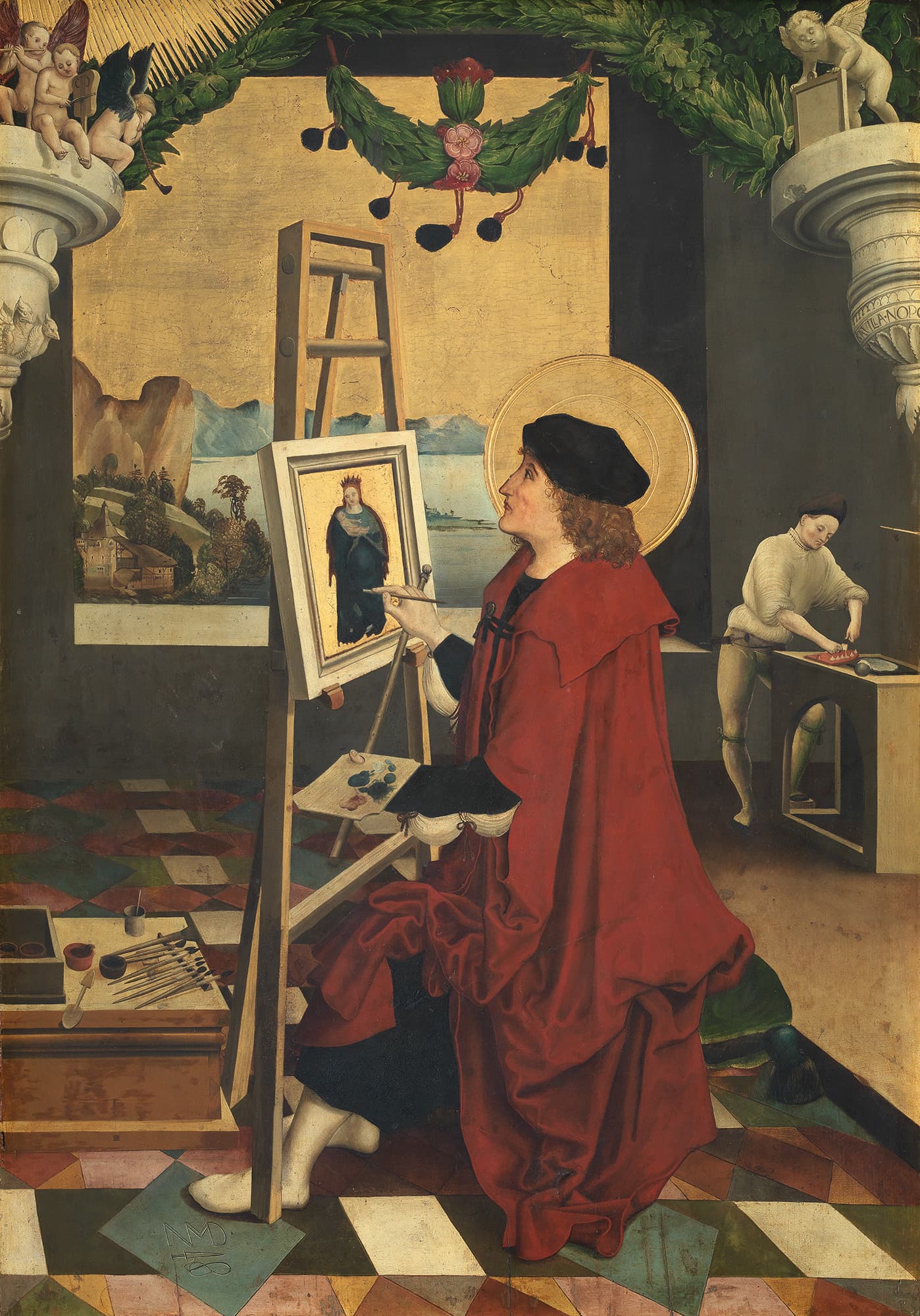
The altarpieces by Niklaus Manuel, created a few years later, testify to a different spirit. The Bern painter, draftsman, poet and statesman was an outstanding figure of the early modern period. His works are rooted in the tradition of late medieval art, but are nevertheless informed by their originality, pictorial spaces employing perspective and realistic-looking landscapes. The use of his own monogram and the inclusion of a self-portrait in Der heilige Lukas malt die Madonna (St. Luke Painting the Virgin, 1515) also testify to a new self-image of an artist on the threshold of the Renaissance.
IV. Mythological Imagery
From the Renaissance onwards, art saw a return to antiquity, its aesthetic ideals and mythology. Even during the emerging period of the Baroque in the 17th century, the tales of Roman and Greek deities and heroes from the pens of such authors as Ovid and Virgil remained popular and widely read. Their popularity was evident both in their presence on such everyday objects as coins, carpets and tableware, and in their firm place within the educational canon of the Baroque.
From behind the dramatic, emotionally charged and often violent imagery, a moral message frequently emerged. The depictions were intended to illustrate to the audience the positive as well as the negative consequences of human actions. At the same time, they were used in staging female beauty and nudity and therefore were also at the service of erotically sensual pleasure. It was frequently moments of tension from mythological tales that were depicted, addressing male desire and sexual violations – a ubiquitous subject matter in antique literature.
A particular highlight of our collection are the striking miniatures by Joseph Werner the Younger. These extremely fragile, light-sensitive images, such as Medea (n.d.) or Flora (1666), are rendered in vibrant colours and meticulously detailed. Only a few of these miniatures have survived, which were both Werner’s forte and highly sought after by his contemporaries.
V. Moral Guides
While the art of previous centuries had primarily served the Church, a range of genres and motifs began proliferating from the 16th century onwards. The communication of moral values also found new forms of expression – particularly in Protestant regions, which dispensed almost entirely with sacred imagery. Instead of saints as role models, allegorical personifications such as ancient deities or virtues and vices increasingly took central stage.
The Bern artist Joseph Werner the Younger who had trained internationally was outstanding in this field. His monumental, sophisticated compositions were informed by Baroque opulence, drama and sensuality. He donated his Allegorie auf die Gerechtigkeit (Allegory of Justice,1662), which represents a peak in his oeuvre, to his hometown Bern. As in many other places, the city hall was adorned with the figure of Lady Justice, equipped with scales, a sword of justice and a blindfold; she was an imposing symbol of incorruptible justice and unswerving punishment.
Vanitas motifs also served as moral entreaties. Composed into still lifes or as components of figure paintings; skulls, extinguished candles, books or hourglasses sought to remind people of the transience, impermanence and futility of human existence. Joseph Plepp’s renowned Berner Kebes-Tafel (Bern Kebes Panel, 1633) presents a less pessimistic picture. This complex, teeming image depicts the path of human life as being full of obstacles. Nevertheless, with the help of reason, education and virtue, true happiness could still be achieved.
Works with hidden versos
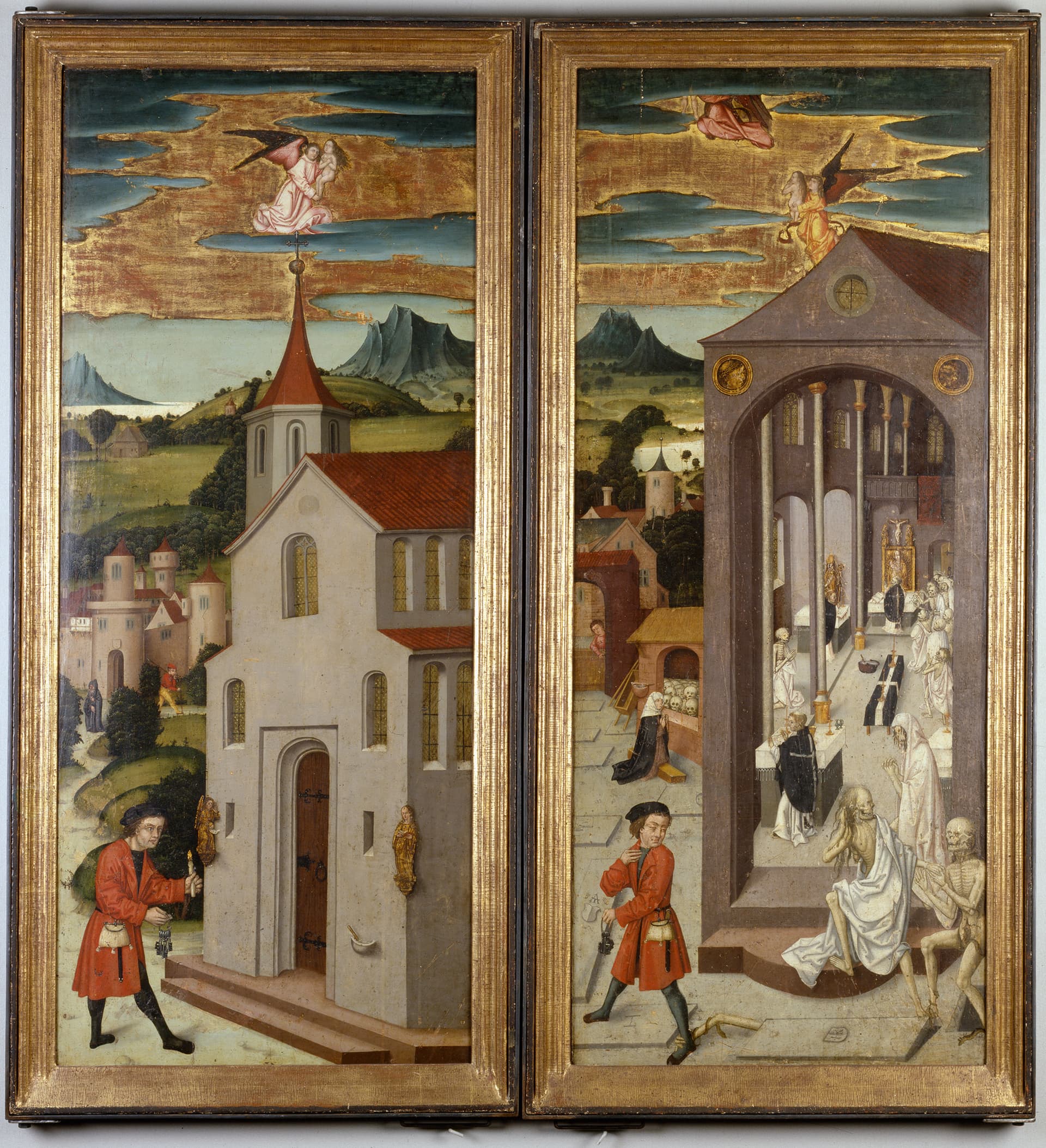
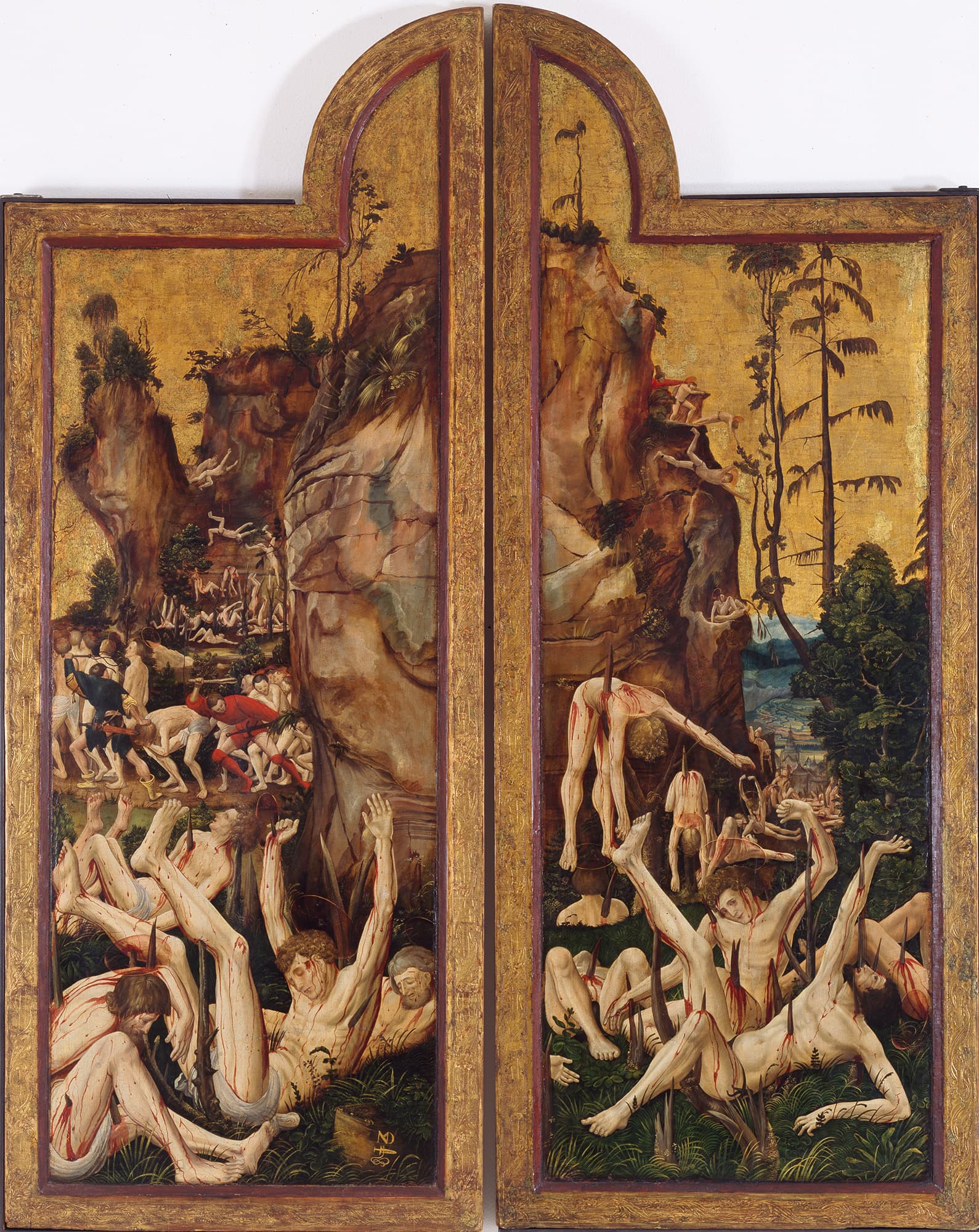
Highlights from our research and restoration
Looking Under the Paint:
following in the footsteps of the Bernese Carnation Masters
Restoration of the altar panels by Niklaus Manuel (in German)
Accompanying programme
Liquid Manuel
New research on Niklaus Manuel. Lecture by Prof. Alexander Marr (Renaissance and Early Modern Art, Department of Art History, University of Cambridge). In English.
Tuesday, 22 September 2026, 18:00
Imprint
Life in Full. Old Masters from Duccio to Liotard
Kunstmuseum Bern
13.2.–27.9.2026
Curator: Anne-Christine Strobel
Scientific Trainee: Michelle Fritschi
Exhibition Design: Jeannine Moser
Audio Guide
Text: Kunstmuseum Bern
Implementation: tonwelt GmbH
Digital Guide
Implementation: NETNODE AG
Project: Cédric Zubler
With the support of:



Kunstmuseum Bern
Hodlerstrasse 8–12, 3011 Bern
+41 31 328 09 44
info@kunstmuseumbern.ch
kunstmuseumbern.ch/oldmasters


